Words of Auto No-Fault reform continued to stay in the air this week as the House Insurance committee while the topic of abortion found its way to the Senate Judiciary committee. Let's review the events of the past week:
House:
The House Health Policy committee met this week and considered two items which the committee took only testimony. The first bill was House Bill 4156 which would create liability protections for nurses who are practicing under a special volunteer license. This practice is common for other health professionals including physicians, dentists, and others. Little opposition was brought to the committee's attention and this bill should be voted on next week in the committee. The second bill the committee reviewed was Senate Bill 165 which would require hospitals to provide in writing information to the patient's parent or guardian, if the patient was a minor, on the use or non use of life sustaining treatment or non beneficial treatment. The committee is expected to vote this legislation out in the coming week as well.
The main event this week was again in the House Insurance committee where they continued taking testimony on House Bill 4612 that would reform Michigan's Auto No-Fault system. The committee started in the morning back in their normal committee location in the House Office Building. The committee room along with two other rooms were pack full of people concerned about the impending changes brought forth by the legislature. The committee went until Noon where it broke so that the members could go to Session to work on the items planned for the full House that day. After Session the members of the committee came back and continued until just after 5:00pm. Just before the committee broke, Chairman Lund asked for amendments to the bill and ran those, which would take away the $50,000 cap for retrofitting houses or cars and removing the 16 hours cap for in home care allowing for a full 24 hour in home care. After all the amendments were considered the committee took their vote seeing the legislation leave the House Insurance committee on a partisan vote, all Republicans voting for and the Democrats voting against. Now the legislation heads to the full House where some are saying that some members on the republican side don't want to vote on the issue.
Senate:
The Senate this week had the youth in mind this week. Starting with the Health Policy Committee, they considered Senate Bills 237, 238, 239 that would amend the Public Health Code, School Code, and the School Aid Act to move the grade requirement from 6th grade to 7th grade starting January 2014. Legislation was provided to move the grade requirement so that it would be able to fit all of the age requirements that health professionals were looking to obtain. These bills were sent to the Senate Floor after the committee voted out the legislation. It would expected for the Senate to consider the bills in the coming week.
The Senate Judiciary committee took another track this past meeting and had a discussion with the Department of Licensure and Regulatory Affairs about conflicts of interest on their licensure boards. This topic arose after a situation in Muskegon which involved the Michigan Board of Medicine. MSMS as been actively engaged with the issue of the committee and is working with the committee and the Board of Medicine to answer any and all questions.
Budget:
Budgets at this point are at a stand still. It is expected here in the next couple weeks that the House and Senate will whats called "zero out" the budgets sent by their colleagues in the other chamber returning the legislation back to their original chamber and finally sending them to Conference committee. All members of the Appropriations committee are awaiting the May Revenue Estimating Conference here in the coming weeks.
Stay with MSMS and MSMS Government Relations to get the up to date information either at http://www.msms.org/advocacy or on Twitter or Facebook!
Showing posts with label Auto No-Fault. Show all posts
Showing posts with label Auto No-Fault. Show all posts
Friday, May 3, 2013

Friday, April 26, 2013
Legislative Update Week of April 22nd
This week saw the start of an issue that MSMS has been concerned with for the past decade. The second attempt in the past four years to reform Michigan's Auto No Fault system officially started; while at the same time taking attention away from both chambers passing their respective budget bills furthering that process down the road. Let’s review the activities of the past week:
House
This week the full House took action on their budget bills sending their usual two budget bills to the Senate for their consideration. The general government budget omnibus legislation saw the least amount of controversy with the education omnibus bill, affectionately known as the "School Bus" has a harder time moving due to some language that dealt with employee contracts. Both bills are now in the Senate passing another hurdle in the budget process.
More importantly the House finally sent Senate Bills 178 and 179 to the Governor for his consideration. These pieces of legislation would help create the uniformed prior authorization forms for physicians when looking to obtain authorization for prescriptions. This will finally bring some solid reforms providing physicians more time with patients and less time doing paperwork.
The House Health Policy committee this week had a presentation on CRE infections. This topic came about from an article that was in the WashingtonPost concerning the increase in the dangerous infections around the country and that only a few states were tracking them. Matthew Sims, MD, who is the Director of the Department of Infectious Disease Research at Beaumont hospital, testified for the medical society on the effects of the infections in Michigan what health systems and physicians are doing about it. There could be future legislation that could require physicians report the instances of CRE infections.
 |
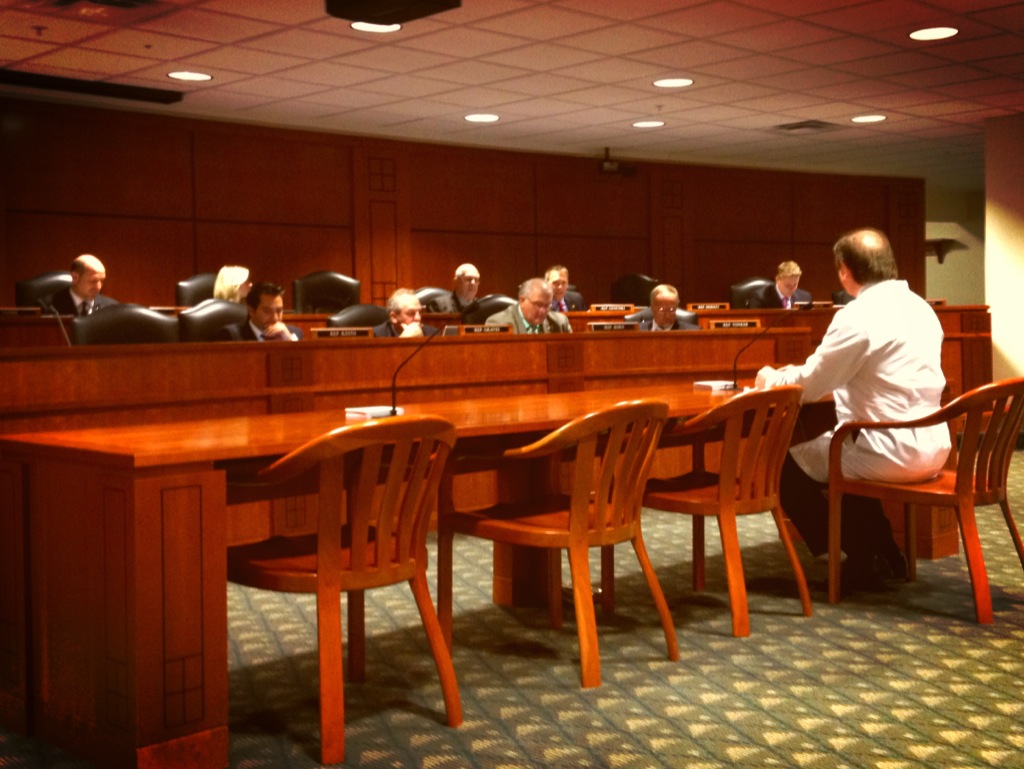
| Picture inside committee room for the No-Fault hearing. |
The committee was held in the largest room available to the House for committees and still had four more rooms and hallways full of people wanting to testify and get their voice heard on the issue. The committee went late into the afternoon with the promise that those who wanted to testify could. Finally at the end of the day the committee was not able to get through everyone leaving with more committee meetings to happen here in the near future. MSMS is working with the Coalition Protecting Auto No-Fault (CPAN) in providing information for the committee members on why this is the wrong move for Michigan. We will continue working with our partners to stop this harmful legislation.
Senate:
The senate had more of a mundane week by having them primarily working on their budgets, sending each individual budget to the House for their consideration; a different move from the House that bundled their budgets together. Multiple amendments were made on the floor including the amendment to place the Medicaid expansion money in the Department of Community Health budget, but failed along party lines. With the expansion money still left out it leaves supporters working and pushing for the money to be included. At this point we wait to see the work of the crucial conference committees that will ultimately make the decision on the expansion money.
This week is the MSMS House of Delegates in Grand Rapids. We will be providing an overview of the issues that happened at the annual meeting. Follow MSMS at http://www.msms.org/advocacy to get the up to date information from our Twitter and Facebook feeds. Stay with us as well to get the most up to date information on the issue affecting physicians around Michigan.
Friday, April 19, 2013
Legislative Update Week of April 15th
This week saw a flurry of legislative activity on health issues and other that are big for the medical community, lets get into the review:
House:
This week the House Health Policy committee took testimony on House Bill 4524, the Patient Right to Know legislation. Dr. Kenneth Elmassian, MSMS President-Elect, testified to the committee providing his expertise to the committee on this issue. "It gives patients more information when they are seeking and receiving their health care," Elmassian said. "Let's be honest, the health care system is very confusing. Patients deserve better than the system is currently giving them." The committee members fired back though leaving those in the committee wondering if the legislation would have a hard time getting out. We will be waiting to see what the committee will do in the coming week and we will let you know if the legislation moves further in the process.
Senate:
The Senate Reform, Restructuring, and Reinventing committee this week took its final week of testimony and moved Senate Bill 2 out of the committee to the full Senate Floor for its consideration. We reported before that this legislation would provide a sweeping change to the Public Health code providing independance for NP's CNM's and CNS-C's. For more indepth information on the original bill click on "2" above to obtain bill language and legislative analysis from the Senate Fiscal Agency. Dr. Rose Ramirez, MSMS's Speaker of the House, testified to the committee with her personal professional experience starting out in nursing and then obtaining her MD and working as a physician. "As
physicians, our overarching concern is with the well-being of our patients and that
the laws and regulations of Michigan lead to health care that is safe,
efficient, and of the highest quality.
Patients benefit from having a focused, team-based approach that
encourages communication and collaboration among the various members of the
team," Dr. Ramirez testified. Through the efforts of the testimony the legislation still made its way out of the committee with a vote count of 6-1.
Budget:
This week saw the Senate Appropriations committee working on their budgets getting them through committee and sent to the full Senate for their consideration. Still left out of the budget was the money for the MSMS supported expansion of Medicaid. Many people around the capitol say that this is a vote that some of the members are either against or uneasy about taking. We could see the budgets get to their final conference committee before a decision is made about the Medicaid expansion.
Auto No Fault:
This week the Governor, along with House and Senate Insurance Chairman, introduced their plan to reform Michigan's Auto No-Fault system. This is round two to a fail attempt last session. That plan created levels of coverage that a individual could purchase that would bring savings to the buyer of the plan. This time around they are taking a different approach by providing a cap for coverage up to $1 Million. Also in the new proposal there will be a pilot program that would provide lower cost insurance for those who in poverty, have a clean driving record, and have a low value vehicle. With this program they are hoping that it will entice those who do not have insurance to purchase it. In terms of fraud they are want to begin an auditor program that will be constantly looking for fraud. With this plan officials say that families with two vehicles could see a yearly savings of $250.
“Take a good look at this plan: is it really in the public’s best interest? I hardly think so. Capping lifetime benefits at $1 million for the catastrophically injured ultimately will shove the most vulnerable victims onto Medicaid and will pile the financial responsibility to the taxpayers," said John Cornack, President of the Coalition Protecting Auto No-Fault (CPAN). We expect here in the next few weeks that hearings will begin in the appropriate committees.
Stay with MSMS to get the up to date information on twitter @msmsgovtaffairs, on Facebook or online at http://www.MSMS.org/advocacy.
House:
 |
| Dr. Kenneth Elmassian testifying to the House Health Policy Committee |
Senate:
 |
| Dr. Rose Ramirez answering questions in the Senate Triple R committee. |
Budget:
This week saw the Senate Appropriations committee working on their budgets getting them through committee and sent to the full Senate for their consideration. Still left out of the budget was the money for the MSMS supported expansion of Medicaid. Many people around the capitol say that this is a vote that some of the members are either against or uneasy about taking. We could see the budgets get to their final conference committee before a decision is made about the Medicaid expansion.
Auto No Fault:
This week the Governor, along with House and Senate Insurance Chairman, introduced their plan to reform Michigan's Auto No-Fault system. This is round two to a fail attempt last session. That plan created levels of coverage that a individual could purchase that would bring savings to the buyer of the plan. This time around they are taking a different approach by providing a cap for coverage up to $1 Million. Also in the new proposal there will be a pilot program that would provide lower cost insurance for those who in poverty, have a clean driving record, and have a low value vehicle. With this program they are hoping that it will entice those who do not have insurance to purchase it. In terms of fraud they are want to begin an auditor program that will be constantly looking for fraud. With this plan officials say that families with two vehicles could see a yearly savings of $250.
“Take a good look at this plan: is it really in the public’s best interest? I hardly think so. Capping lifetime benefits at $1 million for the catastrophically injured ultimately will shove the most vulnerable victims onto Medicaid and will pile the financial responsibility to the taxpayers," said John Cornack, President of the Coalition Protecting Auto No-Fault (CPAN). We expect here in the next few weeks that hearings will begin in the appropriate committees.
Stay with MSMS to get the up to date information on twitter @msmsgovtaffairs, on Facebook or online at http://www.MSMS.org/advocacy.
Thursday, January 17, 2013
Legislative Update Week of January 14th
With the new session still in its infancy, the Legislature has not been able
to get up to working at full speed yet. They awaited two crucial pieces of
information: one, how much money they would have to budget with, and secondly
the agenda and direction the Governor wanted to go in, Over the past week the
Legislature received that information, let’s review:
Consensus Revenue Estimating Conference
Before the start of the new legislative session the House and Senate Fiscal Agencies along with the State Treasurer came together to discuss the estimated revenue that the state would have in the coming fiscal year at the Consensus Revenue Estimating Conference. This conference meets twice a year, in January and in May. The conference heard from both of the fiscal agencies along with the Department of Treasury. The University of Michigan was also invited to provide an economic outlook for the state in the coming years ahead. Let’s break down the numbers:
Unemployment:
The outlook for Michigan unemployment picture is slowly brightening up. With a current rate for 2012 at 8.9%, economists forecast that the overall rate for the coming year will drop a point to 8.8%; drop to 8.2% in 2014 and 7.6% in 2015.
Personal Income:
With the drop in unemployment forecasted and second positive is the forecast of increasing personal income for those working. For 2013 it has been forecasted to increase 2.6% with a 4.3% increase in 2014 from 2013 and 4.4% increase in 2015. A direction the Governor has been advocating for since his election two years ago.
State Budget:
What does that mean for Michigan? One could extrapolate that with the increase in income over the coming year that revenues for the State will be increasing. With FY 2013 though, that isn't the case. The General Fund General Purpose monies, that fund programs like Medicaid, will actually see a decrease from FY 2012 of $472.9 Million or a change of 5.1%. The School Aid fund is expected to add an additional $249 Million than what was estimated May 2012. We could see some cuts coming in programs in Michigan for FY 13 but expected an increase in revenue of $472.2 Million for FY 14. Now the Governor will present his budget proposal to the Legislature on February 7th, so we wait and see how programs will be affected.
State of the State Address
The Governor's State of the State address was just like the other he has delivered, using an outline to rather than providing an actual written speech when he delivered it. The Governor started by providing a review of where the State was with his dashboards that he has made famous over his term has Governor. The dashboard can be view by clicking the link above. The Governor reported that with the changes that Michigan has seen over the past two years, the economy in Michigan was growing and Michigan was putting people back to work.
The road ahead for the Governor looks to continue the same success that has had over the past two years. There were three major messages that Governor Snyder conveyed to the lawmakers this past Wednesday night: one an increase in funding for roads is needed and needed now. The Governor is looking to raise 1.2 Billion each year for 10 years to cover the costs of repairing Michigan's crumbling roads. This was met with hesitation by many from his own party since the plan included a large fee increase to automobile registration. Time will tell on whether this proposal will make it out of the legislature or not.
The second major proposal was educational and the increase efforts to pass an Education Achievement Authority. Fifteen schools in the Detroit area are already operating under the premise of an Authority that provides a different look at education than what is considered typical in Michigan. Students are taught to master skills without the fear of receiving failing grades and worried about whether or not they will make it to the next grade. The Governor would like to have the opportunity to bring this proposal state wide to all of the schools that are struggling in Michigan.
Finally, the third biggest topic was insurance reform. The Governor vetoed the last efforts by the legislature to reform Blue Cross Blue Shield due to the abortion amendments that were tacked on by the House in the final days of the last session. The Governor now asked the legislature to go back to the drawing board and bring legislation forward that would move the Blues in a world that had a health insurance marketplace. Auto no fault insurance was the other insurance reform topic of his speech. He wants reforms done this year to provide protection to the insurance companies on their liability and legacy costs for those involved in an auto accident. It is inevitable that this will be on the agenda of this legislature.
To get more details on the Governor's State of the State address click here.
Stay with MSMS to receive all of the up to date information at http://www.msms.org/advocacy.
Consensus Revenue Estimating Conference
Before the start of the new legislative session the House and Senate Fiscal Agencies along with the State Treasurer came together to discuss the estimated revenue that the state would have in the coming fiscal year at the Consensus Revenue Estimating Conference. This conference meets twice a year, in January and in May. The conference heard from both of the fiscal agencies along with the Department of Treasury. The University of Michigan was also invited to provide an economic outlook for the state in the coming years ahead. Let’s break down the numbers:
Unemployment:
The outlook for Michigan unemployment picture is slowly brightening up. With a current rate for 2012 at 8.9%, economists forecast that the overall rate for the coming year will drop a point to 8.8%; drop to 8.2% in 2014 and 7.6% in 2015.
Personal Income:
With the drop in unemployment forecasted and second positive is the forecast of increasing personal income for those working. For 2013 it has been forecasted to increase 2.6% with a 4.3% increase in 2014 from 2013 and 4.4% increase in 2015. A direction the Governor has been advocating for since his election two years ago.
State Budget:
What does that mean for Michigan? One could extrapolate that with the increase in income over the coming year that revenues for the State will be increasing. With FY 2013 though, that isn't the case. The General Fund General Purpose monies, that fund programs like Medicaid, will actually see a decrease from FY 2012 of $472.9 Million or a change of 5.1%. The School Aid fund is expected to add an additional $249 Million than what was estimated May 2012. We could see some cuts coming in programs in Michigan for FY 13 but expected an increase in revenue of $472.2 Million for FY 14. Now the Governor will present his budget proposal to the Legislature on February 7th, so we wait and see how programs will be affected.
State of the State Address
The Governor's State of the State address was just like the other he has delivered, using an outline to rather than providing an actual written speech when he delivered it. The Governor started by providing a review of where the State was with his dashboards that he has made famous over his term has Governor. The dashboard can be view by clicking the link above. The Governor reported that with the changes that Michigan has seen over the past two years, the economy in Michigan was growing and Michigan was putting people back to work.
The road ahead for the Governor looks to continue the same success that has had over the past two years. There were three major messages that Governor Snyder conveyed to the lawmakers this past Wednesday night: one an increase in funding for roads is needed and needed now. The Governor is looking to raise 1.2 Billion each year for 10 years to cover the costs of repairing Michigan's crumbling roads. This was met with hesitation by many from his own party since the plan included a large fee increase to automobile registration. Time will tell on whether this proposal will make it out of the legislature or not.
The second major proposal was educational and the increase efforts to pass an Education Achievement Authority. Fifteen schools in the Detroit area are already operating under the premise of an Authority that provides a different look at education than what is considered typical in Michigan. Students are taught to master skills without the fear of receiving failing grades and worried about whether or not they will make it to the next grade. The Governor would like to have the opportunity to bring this proposal state wide to all of the schools that are struggling in Michigan.
Finally, the third biggest topic was insurance reform. The Governor vetoed the last efforts by the legislature to reform Blue Cross Blue Shield due to the abortion amendments that were tacked on by the House in the final days of the last session. The Governor now asked the legislature to go back to the drawing board and bring legislation forward that would move the Blues in a world that had a health insurance marketplace. Auto no fault insurance was the other insurance reform topic of his speech. He wants reforms done this year to provide protection to the insurance companies on their liability and legacy costs for those involved in an auto accident. It is inevitable that this will be on the agenda of this legislature.
To get more details on the Governor's State of the State address click here.
Stay with MSMS to receive all of the up to date information at http://www.msms.org/advocacy.
Thursday, December 27, 2012
Legislative Update (Special Edition)
With the Legislature finally closing its books on the 96th Legislature there
were many issues that made their way through the process that kept MSMS on its
toes. We provided several letters of support or opposition, provides hours of
testimony to the House and Senate, and made hundreds of office visits and phone
calls and e-mails. All of this truly helped shape the health policy that
Michigan gained over the past two years. Now that the session is over we want
to take a look at the issues that affected all of us:
Liability Reform:
The largest victory for MSMS this year was the passage of reforms that would
bring Michigan's tort climate back toward what was originally passed by the
legislature in 1993. Senate Bills 1115 and 1118 were passed by the legislature
in, what some would call, a legendary lame duck session of the Michigan
Legislature. These reforms did not come without the battles including five
committee hearings in the Senate on these bills which lead to huge crowds in
the committee rooms. Those who were for and those against the reforms packed
the room wanting to make their presence known to the committee and how they
felt.
After hours and hours of testimony the Senate committee moved the
legislation to the floor and from there the legislation had covered it first
real hurdle. Deliberations, discussions, amendments, and speeches against and
for the legislation lead us to the final day of working session for the
legislature where the House finally took up the legislation on the floor and
gave it its blessing to send it to the Governor for his signature. It has been
almost twenty years since there has been some significant tort reform for
medical malpractice in Michigan until the end of this session, these tort
reforms will be good for physicians but more importantly good for patients.
Earlier in the term MSMS worked on legislation that would allow those physicians
who are employed to volunteer in clinics and be provided protections that are
afforded to those who are retired and work in the clinics (House Bill 4350). There was contention
with this legislation since it provided what some classified as blanket
immunity has they had in the later tort reform debate. Working with the members
of the Senate, MSMS and other parties were able to come to an agreement that
would provide the protection to those who are not contractually compelled to
work in clinics to receive the liability protections of those who are retired
and volunteering. It was a great day for medicine by opening the door to those
physicians who wish to give of their time to help those who need the help the
most.
Medical Marihuana:
In this term Medical Marihuana left us with the question of what a
"bona-fide patient/physician relationship" was in the eyes of the
law. In medicine that question can lead to several answers. The face to face
relationship all the way to telemedicine can lead to the definition of a
patient/physician relationship. The Medical Marihuana statute stated that grey
area that required patients to have this relationship with their physician but
did not state what that relationship looked like and left law enforcement and
the medical community scratching their heads. Insert House Bill 4851 which for
the purposes of Medical Marihuana defined what that relationship looked like.
Now patients would have to have contact with their physicians regularly rather
that a one and done visit as some were seeing for those who were looking to
obtain a certification for Medical Marihuana.
Insurance:
Insurance was an issue that started right away in the session with the attempt by the House to change the Michigan Auto No Fault system. House Bill 4936 wanted to provide levels of coverage that a person can obtain that would provide a certain level of financial coverage for any personal injury that occurred in an auto accident. From the state this was an issue that MSMS was against. Legislators were looking to provide choice for those individuals who were looking to save on car insurance and also provide relief to the Michigan Catastrophic Claims Fund, the fund that covers those gravely injured in an auto accident. Proponents of the legislation stated that the changed needed to happen since in its current form it would bankrupt the system. Opponents of the legislation asked to see the numbers and in the end were never given the opportunity to see the hard data. The House Insurance committee did pass a series of reformed and sent it to the House floor for their consideration but were never able to obtain the votes. Expect this issue back again the new session.
It wouldn't be a complete legislative session if Blue Cross/Blue Shield wasn't involved in some way. This term they had the backing of the Governor and finally found a way to get out from under PA 350 or the Nonprofit Health Care Corporation Reform Act. This act provided the tax breaks that the Blues enjoyed but also provided some requirements that the Blues did not enjoy. With the impending implementation of the health insurance exchange in Michigan, the Governor thought it was time to bring a change to the Blues and give them the ability to compete in the insurance exchange among other reasons and push for legislation to reform the Blues. The Legislature responded and created a nonprofit mutual insurer in the state of Michigan and providing a path to those incorporated under PA 350 to convert into this mutual insurer. This legislation did not come without a cost, requiring that the Blues pay to the state $1.56 Billion from now until 2018. This money will be placed in a health fund used to cover health projects and subsides Medigap policies until 2021 at a cost of $120 Million a year. The Governor received his wish and Senate Bills 1293 and 1294 were sent to his desk where they await his eventual signature.
Helmets:
Before the Legislature left for the summer break this past year they decided to take up an issue that has been on the burners of the legislature for years. They finally made a decision on the age old question, should you be required to wear a helmet while operating a motorcycle? In their opinion you should not be required since it was your individual right to determine whether you ride with a helmet or not. Senate Bill 291 made its way through the legislature going through its ups and downs, being amended several time, and at one point being used in the same conversation the changes with Auto No Fault, but in the end it was finally time according to the legislature to act on this measure. MSMS was adamantly opposed to the legislation reasoning that the having helmet on in an accident will give you the greatest chance to walk away from that accident but the Governor and Legislature did not see it that way and now today we have those who cherish their individual freedoms riding without a helmet. Time will tell if this was a wise decision for Michigan.
Graduate Medical Education:
Every year at MSMS we always face small battles when it comes to the budget, whether it’s trying to get more money for Medicaid, trying to stop the cut to public health funding, or trying to keep J-1 visa waivers in the budget we always have some small battles. One that always continued to come up and we feel will continue to, is the funding for Graduate Medical Education. The Governor has presented his last two budgets to the legislature with significant cuts to the program citing that the priority should be funding Medicaid at a higher level so that physicians will service more patients on Medicaid rather than funding the training of new physicians, fresh out of medical school. We see and understand the investment on Graduate Medical Education and what care this provides to those who need to care the most. Through work and education of the legislators we have been able to stay away from the deep cuts proposed by the Governor and only work hard to absorb small cuts from the legislature. In the coming years we will have to continue this fight to keep GME at its current level rather than seeing another cut to the program.
Affordable Care Act:
This is the only federal issue that made out list this year. We all know about the sustainable growth rate (SGR) and how we face looming cuts into Medicare but somehow Congress always finds a way to kick the can down the road. This time we think it will be the same but with the fiscal cliff casting a shadow on other impending issues, it could take some serious lifting by Congress to get this done on time.
But now on to the Affordable Care Act and the decision from United States
Supreme Court that some say rocked and other say solidified the nation in the
future of its health care. The Supreme Court upheld the law saying that it was in
the taxing authority of Congress to mandate insurance for people and was not
within the commerce clause of the US Constitution. This left many states that
were waiting for a decision under the gun if they were going to start creating
their own health insurance exchanges. As for Michigan an attempt was tried with
legislation that was sent from the Senate to the House, Senate Bill 693, but
failed to gain the proper support from the committee. The state will now have a
state/federal partnership exchange in 2014.
Scope of Practice:
This year the Medical Society found itself involved in looking at the future of medicine and how the team approach to care can continue to grow in Michigan. At the start of the term, physician assistants and physicians came together to find ways to grow their partnership in Medicine and came out of those discussions with Senate Bill 384 which brought more clarification on the relationship between PA's and Physicians, strengthening it, providing greater avenues to provides the best care.
Physical Therapists made an attempt this year to provide direct access for patients, bypassing the physician in House Bill 4603. Nurses also were looking for some clarification on their profession and how they fit into the team approach of medicine with Senate Bill 481. Both of these pieces of legislation did not make through the entire legislative process but MSMS is looking forward to continuing discussions with these groups to better strengthen the medical team in Michigan.
Autism:
This legislative term saw the largest advancement in mental health parity in
Michigan in decades. MSMS has always had a long standing policy to support
mental health parity in the insurance coverage of treatment of mental health
conditions. Michigan took a step towards that this term by requiring the
coverage of services surrounding the treatment of Autism. This was a priority
of the Lieutenant Governor, Brian Calley; an issue that he worked hard for when
he was a member of the Michigan House. Senate Bills 414, 415, and 981 started in June of 2011 with 981 adding in March 2012
and by April 18, 2012 it was the law of the land that insurers had to start to
cover Autism services and treatment in Michigan. This is one small victory
towards the larger goal of mental health parity.
Claims Tax:
Starting in 2011 there were rumblings from the federal government that the use tax that was set up by Michigan to tax the insurers that held Medicaid plans in Michigan was going to be ruled illegal and could penalize the State by holding back funds for Michigan's Medicaid program. A dilemma was presented to the legislature on what to do to replace the revenue needed to obtain the funds needed for Medicaid. Thus the claims tax proposal was created. Senate Bills 347 and 348 eliminated the use tax and created a claims assessment or tax on each of the insurance claims filed at a 1% level in Michigan. This was supposed to solve the revenue shortfall that would come with the elimination of the Use Tax but that as time moved on it proved not to be the case and this year the Medicaid faces a $140 Million shortfall that has to be filled somehow. The Senate tried to move Senate Bill 1359 which would provide an adjustable rate to make the need for revenue but was rejected by the Senate Appropriations committee. The legislature continues to look for solutions for the shortfall.
Abortion:
Abortion was an issue that seemed to be on the forefront this term with the legislature as looked tightens up regulations surrounding this hot button issue. There were several bills introduced and has testimony taken but in the end, these bills were placed into one large bill House Bill 5711. This legislation took a look at four major issues the legislature felt needed to be addressed: the licensing of facilities that perform abortions, the disposal of remains, and the liability protections needed by a physician who performs abortions, and the use of telemedicine in an abortion. Those against this bill called this issue the War on Women and continued to push for its stall in the House and the Senate. Those efforts did fail and in the early morning hours of the last day of session, the House concurred with the Senate and sent the bill to be enrolled and presented to the Governor. It’s currently uncertain if the Governor will sign the legislation.
Abortion found its way into the blue cross mutualization changes mentioned above with amendments that were added by the House to require that coverage for elective abortions be an opt-in coverage rather than an opt-out situation when purchasing coverage. We will have to wait and see the impact it will have on Michiganders.
Impaired Drivers:
An issue that MSMS has been working on for several years was finally
accomplished this legislative term by providing liability protections for
physicians who report to the Michigan Secretary of State that a person may be
impaired to operate a motor vehicle. Senate Bills 402 and 403 started in the Senate Transportation committee and made
their way through the entire process landing on the Governor's desk at the end
of the second week of December. With the Governor's signature on this
legislation physicians can report those patients they feel should not be
operating a motor vehicle and let the Secretary of State decide whether that
individual should be driving.
Bullying:
A major issue for the MSMS Alliance with past term was the creation of regulations for schools on how to handle instances of bullying. House Bill 4163 was created to provide the school districts have plans in place to handle bullying and plans that are specific to their school district but meet certain requirements required in the act. In December of 2011 Michigan joined other states by have the Governor sign Matt's Safe School Law into law.
Concussions and High School Athletes:
Watching local high school sports over the past several years there continues to be a push to be faster, be stronger, hit harder and just become more physical overall. With this drive the amount of concussions happening in High School athletics was rising sharply leaving physicians, parents, coaches, and school personal concerned for the safety of the students playing athletics. This lead to the introduction of Senate Bill 1122 and House Bill 5697. Both of these pieces of legislation set into motion procedures that needed to be taken by school personal, what clearance was needed to be obtained by the athlete to compete again and what literature was needed to be provided to the athletes and parents on concussions and their treatment. We are hopeful that this will protect those athletes that want to compete at their highest levels.
With a busy legislative term over, MSMS is looking forward to what the next legislative term will bring. Some of the same issues mentioned today could very well make their way back into the legislative picture in the coming term. Stay with MSMS to get the latest information on issues going through the legislature that affect you and your practice at http://www.msms.org.advocacy. We will be taking a break now until the start of the new term, hope you all have a great new year!
Liability Reform:
 |
| Drs Elmassian and Chafty Testifying |
 |
| View at tort reform hearing. |
 |
| Wayne State Medical Students lobbying for Tort Reform. |
Medical Marihuana:
 |
| Dr. Newman testifying to the Senate Judiciary committee on Medical Marihuana |
Insurance:
Insurance was an issue that started right away in the session with the attempt by the House to change the Michigan Auto No Fault system. House Bill 4936 wanted to provide levels of coverage that a person can obtain that would provide a certain level of financial coverage for any personal injury that occurred in an auto accident. From the state this was an issue that MSMS was against. Legislators were looking to provide choice for those individuals who were looking to save on car insurance and also provide relief to the Michigan Catastrophic Claims Fund, the fund that covers those gravely injured in an auto accident. Proponents of the legislation stated that the changed needed to happen since in its current form it would bankrupt the system. Opponents of the legislation asked to see the numbers and in the end were never given the opportunity to see the hard data. The House Insurance committee did pass a series of reformed and sent it to the House floor for their consideration but were never able to obtain the votes. Expect this issue back again the new session.
It wouldn't be a complete legislative session if Blue Cross/Blue Shield wasn't involved in some way. This term they had the backing of the Governor and finally found a way to get out from under PA 350 or the Nonprofit Health Care Corporation Reform Act. This act provided the tax breaks that the Blues enjoyed but also provided some requirements that the Blues did not enjoy. With the impending implementation of the health insurance exchange in Michigan, the Governor thought it was time to bring a change to the Blues and give them the ability to compete in the insurance exchange among other reasons and push for legislation to reform the Blues. The Legislature responded and created a nonprofit mutual insurer in the state of Michigan and providing a path to those incorporated under PA 350 to convert into this mutual insurer. This legislation did not come without a cost, requiring that the Blues pay to the state $1.56 Billion from now until 2018. This money will be placed in a health fund used to cover health projects and subsides Medigap policies until 2021 at a cost of $120 Million a year. The Governor received his wish and Senate Bills 1293 and 1294 were sent to his desk where they await his eventual signature.
Helmets:
Before the Legislature left for the summer break this past year they decided to take up an issue that has been on the burners of the legislature for years. They finally made a decision on the age old question, should you be required to wear a helmet while operating a motorcycle? In their opinion you should not be required since it was your individual right to determine whether you ride with a helmet or not. Senate Bill 291 made its way through the legislature going through its ups and downs, being amended several time, and at one point being used in the same conversation the changes with Auto No Fault, but in the end it was finally time according to the legislature to act on this measure. MSMS was adamantly opposed to the legislation reasoning that the having helmet on in an accident will give you the greatest chance to walk away from that accident but the Governor and Legislature did not see it that way and now today we have those who cherish their individual freedoms riding without a helmet. Time will tell if this was a wise decision for Michigan.
Graduate Medical Education:
Every year at MSMS we always face small battles when it comes to the budget, whether it’s trying to get more money for Medicaid, trying to stop the cut to public health funding, or trying to keep J-1 visa waivers in the budget we always have some small battles. One that always continued to come up and we feel will continue to, is the funding for Graduate Medical Education. The Governor has presented his last two budgets to the legislature with significant cuts to the program citing that the priority should be funding Medicaid at a higher level so that physicians will service more patients on Medicaid rather than funding the training of new physicians, fresh out of medical school. We see and understand the investment on Graduate Medical Education and what care this provides to those who need to care the most. Through work and education of the legislators we have been able to stay away from the deep cuts proposed by the Governor and only work hard to absorb small cuts from the legislature. In the coming years we will have to continue this fight to keep GME at its current level rather than seeing another cut to the program.
Affordable Care Act:
This is the only federal issue that made out list this year. We all know about the sustainable growth rate (SGR) and how we face looming cuts into Medicare but somehow Congress always finds a way to kick the can down the road. This time we think it will be the same but with the fiscal cliff casting a shadow on other impending issues, it could take some serious lifting by Congress to get this done on time.
 |
| US Supreme Court rendering opinion in Affordable Care Hearings. |
Scope of Practice:
This year the Medical Society found itself involved in looking at the future of medicine and how the team approach to care can continue to grow in Michigan. At the start of the term, physician assistants and physicians came together to find ways to grow their partnership in Medicine and came out of those discussions with Senate Bill 384 which brought more clarification on the relationship between PA's and Physicians, strengthening it, providing greater avenues to provides the best care.
Physical Therapists made an attempt this year to provide direct access for patients, bypassing the physician in House Bill 4603. Nurses also were looking for some clarification on their profession and how they fit into the team approach of medicine with Senate Bill 481. Both of these pieces of legislation did not make through the entire legislative process but MSMS is looking forward to continuing discussions with these groups to better strengthen the medical team in Michigan.
Autism:
 |
| Dr. Phillip Wise with Lt. Governor Brian Calley at the signing of the Autism Legislation. |
Claims Tax:
Starting in 2011 there were rumblings from the federal government that the use tax that was set up by Michigan to tax the insurers that held Medicaid plans in Michigan was going to be ruled illegal and could penalize the State by holding back funds for Michigan's Medicaid program. A dilemma was presented to the legislature on what to do to replace the revenue needed to obtain the funds needed for Medicaid. Thus the claims tax proposal was created. Senate Bills 347 and 348 eliminated the use tax and created a claims assessment or tax on each of the insurance claims filed at a 1% level in Michigan. This was supposed to solve the revenue shortfall that would come with the elimination of the Use Tax but that as time moved on it proved not to be the case and this year the Medicaid faces a $140 Million shortfall that has to be filled somehow. The Senate tried to move Senate Bill 1359 which would provide an adjustable rate to make the need for revenue but was rejected by the Senate Appropriations committee. The legislature continues to look for solutions for the shortfall.
Abortion:
Abortion was an issue that seemed to be on the forefront this term with the legislature as looked tightens up regulations surrounding this hot button issue. There were several bills introduced and has testimony taken but in the end, these bills were placed into one large bill House Bill 5711. This legislation took a look at four major issues the legislature felt needed to be addressed: the licensing of facilities that perform abortions, the disposal of remains, and the liability protections needed by a physician who performs abortions, and the use of telemedicine in an abortion. Those against this bill called this issue the War on Women and continued to push for its stall in the House and the Senate. Those efforts did fail and in the early morning hours of the last day of session, the House concurred with the Senate and sent the bill to be enrolled and presented to the Governor. It’s currently uncertain if the Governor will sign the legislation.
Abortion found its way into the blue cross mutualization changes mentioned above with amendments that were added by the House to require that coverage for elective abortions be an opt-in coverage rather than an opt-out situation when purchasing coverage. We will have to wait and see the impact it will have on Michiganders.
Impaired Drivers:
 |
| Dr. Spanaki testifying with Senator Schuitmaker on Senate Bills 402 & 403 |
Bullying:
A major issue for the MSMS Alliance with past term was the creation of regulations for schools on how to handle instances of bullying. House Bill 4163 was created to provide the school districts have plans in place to handle bullying and plans that are specific to their school district but meet certain requirements required in the act. In December of 2011 Michigan joined other states by have the Governor sign Matt's Safe School Law into law.
Concussions and High School Athletes:
Watching local high school sports over the past several years there continues to be a push to be faster, be stronger, hit harder and just become more physical overall. With this drive the amount of concussions happening in High School athletics was rising sharply leaving physicians, parents, coaches, and school personal concerned for the safety of the students playing athletics. This lead to the introduction of Senate Bill 1122 and House Bill 5697. Both of these pieces of legislation set into motion procedures that needed to be taken by school personal, what clearance was needed to be obtained by the athlete to compete again and what literature was needed to be provided to the athletes and parents on concussions and their treatment. We are hopeful that this will protect those athletes that want to compete at their highest levels.
With a busy legislative term over, MSMS is looking forward to what the next legislative term will bring. Some of the same issues mentioned today could very well make their way back into the legislative picture in the coming term. Stay with MSMS to get the latest information on issues going through the legislature that affect you and your practice at http://www.msms.org.advocacy. We will be taking a break now until the start of the new term, hope you all have a great new year!
Wednesday, June 27, 2012
Legislative Update: Spring Wrap Up
Now that the legislature has moved
into a summer session calendar it’s time to wrap up on some of the issues that
have been on the radar of the Medical Society, let’s review:
Budget:
This year saw another cut scheduled
for Graduate Medical Education with the introduction of the Governor's budget
recommendation. Governor Snyder wanted to take $17 Million out of the program
for other uses, the legislature in some ways disagreed with that
recommendations and only took $8.5 Million which was much better than what the
Governor has recommended. Primary care physicians will now start to see an
increase in Medicaid rates thanks to the Affordable Care Act providing an
increase in Medicaid funding to the tune of $281 Million. Included in Medicaid
now is payment for services surrounding Autism and OB/GYN's receiving a small
bump in their reimbursement rates. We now look to find a way to restore the
$8.5 Million that was cut from GME in the coming months.
Helmet Law:
This spring the long battle to keep
helmets on motorcyclists was finally lost with the Senate pushing the repeal of
the helmet requirement for all motorcyclists in Michigan. As disappointing as
this development was MSMS continues to push for the safety of all motorists on
the roads, motorcyclists or not and is pushing for the tracking of individuals
that were involved in accidents and whether a helmet was used to see if
personal freedom is really worth the safety of all.
Medical Marihuana:
MSMS worked with members in the
House and the House Judiciary committee to help create a narrow definition of
what a patient-physician relationship is when concerning Medical Marihuana. The
statute currently in place provided no direction on that relationship leaving
many ambiguities when dealing with Marihuana. This definition now provides
protections to both patient and physician when dealing with certification for
the substance. This bill was sent to the Senate where it is in the Senate
Judiciary committee awaiting a vote to the Senate floor.
Abortion:
Before the House left for the summer
they attempted to jam a package of bills through the House that dealt with four
issues supported by right to life. These issues ranged from the banning of the
practice of tele-abortions to requiring increased levels of liability coverage
for those who perform a certain amount of abortions. This was a heated issue
between those for and against leaving for one interesting committee meeting
where then the bills were voted out of committee on the same day as the
hearing, which is uncommon for this legislature. This practice left some with a
sour taste in their mouths leaving for nothing short of a floor fight which
left some members without speaking privileges after the debates on the House
floor. The main bill of the package was passed out sent to the Senate, where it
is unknown if the Senate even wants to address this hot potato.
Autism:
A small victory but one that could
lead to total mental health parity, the legislature finally required that
health insurers, private and public, cover the costs associated with Autism.
Those who were against providing the coverage were finally able to come to a
compromise with the help and encouragement of the Lieutenant Governor. This
issue has been close to him since he was a member of the House, so it was
fitting that he signed the bill the put this into law. MSMS hopes that this
issue will not stop here and the fight will continue until we get total mental
health parity.
Tort Reform:
MSMS over the past month has started
to push tort reforms for the purposes of finding ways to increase access to
patients all over Michigan who need the care. With the Affordable Care Act
reforms hanging the balance, the increase of patients who cannot gain access
just by the sure numbers of physicians are staying stable while the demand
rises sharply, we find that there is simply not enough in the workforce to meet
the demand. With the reforms it would make Michigan a more attractive place to practice
medicine providing more opportunities for physicians to come and practice here,
answering the question of how we address those who need the care and can't find
it. The bills started in the Senate and still await a vote from the Senate
Insurance committee. MSMS is hopeful that the legislation will be move soon to
help those patients who need it the most.
MSMS now looks towards the fall
where issues like tort reform, auto insurance reform, and others still linger
from the spring session. Once the legislature gets back into session, MSMS will
continue to cover all of the activity for you. Just go to http://www.msms.org/advocacy
to stay up to date with all that is happening in Lansing and beyond. The Legislative
update will be back in July to cover the one session day scheduled for the
legislature.
Friday, May 25, 2012
Legislative Update: Week of May 21st
This week has been a busy one for MSMS as the tort reform package supported by MSMS has seen some activity in the Senate with activity upcoming in the House. Budgets were the story of the week as the Governor, Speaker, and Majority Leader came to an agreement on the target numbers for the different budgets. Let's review this week's activity:
Senate:
(From midweek)
The Senate Insurance committee took testimony on Senate Bill 1115, 1116, 1117, 1118, affectionately known as the "The Patients First Reform" package. This effort, spearheaded by MSMS and the physician community, is the first significant tort reform package since the early 1990's.
MSMS offered testimony from two different avenues during the hearing, first coming from MSMS Preident-Elect Kenneth Elmassian, DO and Michael Chafty, MD, JD, who chairs the MSMS Board Legislative Policy Committee. Both of the physicians commented on how the having these reforms for Michigan's physicians puts Michigan in a category that it has never been accustomed to: a destination for physicians to practice. "Like many other states, prior to the adoption of meaningful tort reform in 1993 Michigan was a state in crisis," said Dr. Elmassian. Elmassian went on to say, "Those of us who live through this crisis are obligated to be vigilant to maintain the intent of the reforms passed in 1993. Senate Bills 1115-1118 seek to do just that."
Opponents against the legislation said that it would hinder the patent's or the patent's family's ability to gain recourse for a mistake of a physician. They also say it would take away the ability to provide for the services that a person needs to counter the pain and suffering sustained by the injury. Another argument against the bills was that the tort reforms would not help an impending physician shortage in Michigan because we simply don't have one. Referring to a study from the AMA from 1995, as was pointed out by Dr. Chafty in his testimony, the amount of physicians Michigan has is the right number to serve the population that needs health care. Dr. Chafty noted that with the increasing amount of physicians getting closer to retirement and the growth in the amount of people that are going to need care, the need for physicians will grow to an amount of 4,500 by 2020.
The committee continued taking testimony until 4:30pm that day. It will reconvene again in a week to continue taking the testimony from all of those wishing to testify. MSMS will continue to offer coverage of the proceedings.
The Senate Health Policy committee did not meet this week but there are rumblings that the committee will be posting for the coming week taking up expanding scope of practice for nurses.
House:
The House Health Policy committee did meet this week and had a presentation on drug adherence from CVS pharmacies. MSMS was not able to attend the meeting but understands it was very informative.
The House Insurance committee met this week working on their continued effort to reform Michigan's auto no fault insurance system. This week they considered a series of bills that would exempt certain persons from being protected by the Personal Injury Protection (PIP) sections of the policy. MSMS was concerned with three bills in the package House Bill 5587, 5588, and 5589. These bills would exempt those committing a crime or in the process of committing a crime and their accomplice from PIP coverage and also those who are operating under the influence of alcohol or a controlled substance to be covered under PIP as well. The MSMS Legislation and Regulations committee will be considering these bills at their next meeting. We will continue to monitor their progress.
The House Judiciary committee will be scheduling a hearing for the House versions of the MSMS supported tort reform package this coming Thursday, May 31st at 10:30 am in the Anderson House Office Building. The House versions of the bills are 5669, 5670, 5671, and 5672. Once the committee meets, MSMS will have coverage of the events as they unfold on Twitter, Facebook and our blog.
Budget:
The House, Senate, and Governor have come to an agreement on the target numbers for the coming year's budget. This is positive news for the Department of Community Health budget where more money was allotted for the department which leave the possibility that GME could receive even more funding. MSMS is working with the legislative leaders to ensure just that. The House Republicans are looking to build into their budget an income tax relief package for Michigan that would reduce the income tax rate. Its uncertain the amount of savings that tax payers would see. MSMS will continue to stay with the budget until its signed into law.
For more information on Michigan politics and legislative activities stay connected with MSMS at http://www.msms.org/advocacy. With the upcoming elections, you need to know who support you and your profession, go to http://www.mdpac.org to find out that information and more!
Senate:
(From midweek)
 |
| Michael Chafty, MD, JD |
|
| Elmassian and Chafty testify for the Senate Insurance Committee |
MSMS offered testimony from two different avenues during the hearing, first coming from MSMS Preident-Elect Kenneth Elmassian, DO and Michael Chafty, MD, JD, who chairs the MSMS Board Legislative Policy Committee. Both of the physicians commented on how the having these reforms for Michigan's physicians puts Michigan in a category that it has never been accustomed to: a destination for physicians to practice. "Like many other states, prior to the adoption of meaningful tort reform in 1993 Michigan was a state in crisis," said Dr. Elmassian. Elmassian went on to say, "Those of us who live through this crisis are obligated to be vigilant to maintain the intent of the reforms passed in 1993. Senate Bills 1115-1118 seek to do just that."
 |
| Kenneth Elmassian, DO |
The committee continued taking testimony until 4:30pm that day. It will reconvene again in a week to continue taking the testimony from all of those wishing to testify. MSMS will continue to offer coverage of the proceedings.
The Senate Health Policy committee did not meet this week but there are rumblings that the committee will be posting for the coming week taking up expanding scope of practice for nurses.
House:
The House Health Policy committee did meet this week and had a presentation on drug adherence from CVS pharmacies. MSMS was not able to attend the meeting but understands it was very informative.
The House Insurance committee met this week working on their continued effort to reform Michigan's auto no fault insurance system. This week they considered a series of bills that would exempt certain persons from being protected by the Personal Injury Protection (PIP) sections of the policy. MSMS was concerned with three bills in the package House Bill 5587, 5588, and 5589. These bills would exempt those committing a crime or in the process of committing a crime and their accomplice from PIP coverage and also those who are operating under the influence of alcohol or a controlled substance to be covered under PIP as well. The MSMS Legislation and Regulations committee will be considering these bills at their next meeting. We will continue to monitor their progress.
The House Judiciary committee will be scheduling a hearing for the House versions of the MSMS supported tort reform package this coming Thursday, May 31st at 10:30 am in the Anderson House Office Building. The House versions of the bills are 5669, 5670, 5671, and 5672. Once the committee meets, MSMS will have coverage of the events as they unfold on Twitter, Facebook and our blog.
Budget:
The House, Senate, and Governor have come to an agreement on the target numbers for the coming year's budget. This is positive news for the Department of Community Health budget where more money was allotted for the department which leave the possibility that GME could receive even more funding. MSMS is working with the legislative leaders to ensure just that. The House Republicans are looking to build into their budget an income tax relief package for Michigan that would reduce the income tax rate. Its uncertain the amount of savings that tax payers would see. MSMS will continue to stay with the budget until its signed into law.
For more information on Michigan politics and legislative activities stay connected with MSMS at http://www.msms.org/advocacy. With the upcoming elections, you need to know who support you and your profession, go to http://www.mdpac.org to find out that information and more!
Friday, March 2, 2012
Legislative Update: Week of February 27th
Happy leap week to everyone. On this leap week the House was a fury of
activity including hearings on medical marihuana and diabetes. Changes to
Michigan's Auto No-Fault continue to stay stagnant in the House which is a promising
sign. Information has surfaced that could tie to hold of the legislation to the
differences in fee schedules for physicians, MSMS will continue to monitor this
issue has it continues to develop. Last week the Legislature was primarily
concentrated on finding a funding solution to the Highland Park school
financial crisis but committees continued to do their work in the mean time.
House:
House Health Policy committee this week considered House Bill 5204 which requires the Department of Community Health to research the financial and health impact of Diabetes on Michigan's citizens and create an action plan to curb diabetes. The DCH testified against this bill stating that they already do what the bill states but with the lack of financial support from the legislature, the programs and measures to help curb diabetes and obesity are stopping their efforts. Those that testified for the plan stated that this was an excellent step forward in fighting the disease but did not mention the efforts already put forward by the department. The committee just took testimony on the legislation; a vote could come as early as next week.
The House Judiciary committee continued taking testimony on House Bills 4851, 4853, and 4856 all three dealing with Medical Marihuana. MSMS is concerned with House Bill 4851 which defines what a bona-fide patient/physician relationship is. Included in the definition it would require for a relationship to exist: a full history and review of the patients history including an in-person physical examination, follow-up care is provided by the physician and there is continuing contact with the physician who has certified for the use of marihuana, and if given permission by the patient, notification is given to the patient's primary care physician of certification, if the physician who certifies is not the primary care physician of the patient. Testimony that was heard by the committee yesterday was all against these changes stating that it would take away from the patient their rights of privacy and cause inconvenience for having multiple physicians. MSMS stands in support of the changes and feel that is now gives authority to the Board of Medicine the ability to police the actions taken under the act where before there was very limited authority to do so. The committee will continue to hear testimony in the coming weeks.
Senate:
The Senate Health Policy committee met this week to discuss the Governor's push for insurance coverage on Autism. They considered Senate Bills 414, 415, and 981 which provide the changes to the Insurance Code and the Non Profit Health Care Corporation Act. MSMS supports moving forward with covering Autism since we see it as a first step toward our ultimate goal of mental health parity. The committee will continue to take testimony on the issue in the coming weeks.
Appropriations:
Both House and Senate Appropriations Subcommittees continued their hearings this week. The Senate heard the general overview from the DCH director, Olga Dazzo while the House heard testimony from Steve Finton, director of Michigan's Medicaid program. Both committees will be meeting in the coming weeks.
If you are looking for when committees are scheduled or what the State House or Senate have on their agendas for the day go to http://www.msms.org/advocacy to check out our calendar for all the upcoming legislative and MDPAC events.
House:
House Health Policy committee this week considered House Bill 5204 which requires the Department of Community Health to research the financial and health impact of Diabetes on Michigan's citizens and create an action plan to curb diabetes. The DCH testified against this bill stating that they already do what the bill states but with the lack of financial support from the legislature, the programs and measures to help curb diabetes and obesity are stopping their efforts. Those that testified for the plan stated that this was an excellent step forward in fighting the disease but did not mention the efforts already put forward by the department. The committee just took testimony on the legislation; a vote could come as early as next week.
The House Judiciary committee continued taking testimony on House Bills 4851, 4853, and 4856 all three dealing with Medical Marihuana. MSMS is concerned with House Bill 4851 which defines what a bona-fide patient/physician relationship is. Included in the definition it would require for a relationship to exist: a full history and review of the patients history including an in-person physical examination, follow-up care is provided by the physician and there is continuing contact with the physician who has certified for the use of marihuana, and if given permission by the patient, notification is given to the patient's primary care physician of certification, if the physician who certifies is not the primary care physician of the patient. Testimony that was heard by the committee yesterday was all against these changes stating that it would take away from the patient their rights of privacy and cause inconvenience for having multiple physicians. MSMS stands in support of the changes and feel that is now gives authority to the Board of Medicine the ability to police the actions taken under the act where before there was very limited authority to do so. The committee will continue to hear testimony in the coming weeks.
Senate:
The Senate Health Policy committee met this week to discuss the Governor's push for insurance coverage on Autism. They considered Senate Bills 414, 415, and 981 which provide the changes to the Insurance Code and the Non Profit Health Care Corporation Act. MSMS supports moving forward with covering Autism since we see it as a first step toward our ultimate goal of mental health parity. The committee will continue to take testimony on the issue in the coming weeks.
Appropriations:
Both House and Senate Appropriations Subcommittees continued their hearings this week. The Senate heard the general overview from the DCH director, Olga Dazzo while the House heard testimony from Steve Finton, director of Michigan's Medicaid program. Both committees will be meeting in the coming weeks.
If you are looking for when committees are scheduled or what the State House or Senate have on their agendas for the day go to http://www.msms.org/advocacy to check out our calendar for all the upcoming legislative and MDPAC events.
Friday, February 24, 2012
Legislative Update: Week of February 20th
We apologize for the lengthy absence but we're are back at it this week and we have a lot to cover, so lets dive right in! The attempted changes in Michigan's Auto No-Fault system continue to loom in the House. In its current version many members are finding that voting for this would leave a sour taste in their mouths and make them vote on an issues that they really just don't want to vote on. Conversations on this issue have gone quiet for the moment, but we will continue to watch and act when the time is needed.
Last week the Governor Snyder presented his budget to both House and Senate Appropriations committees. On the Health side of things there are some positives and some negatives. On the positive side there will be an increase in Medicaid rates for primary care physicians excluding emergency room physicians to 100% of Medicare rates, which totals just over $281 Million. On the downside the Governor put GME back in his sights and reduced GME another 17% which overall totals 32% from this fiscal year and the coming fiscal year. Now the House and Senate subcommittees will begin to hear testimony from DCH concerning the budget and work to create their own.
The House Health Policy committee has been working on a couple issues, one the consolidation of substance abuse with community mental health and the other requiring reimbursement for telemedicine. The committee next week looks to vote on the telemedicine issue while the other issue was voted out of committee. The committee of the next few weeks thought will be Judiciary. The House Judiciary committee began taking testimony on changes to Michigan's Marihuana Act, providing changes to the act including defining what a bona-fide patient/physician relationship is. In the coming weeks the committee will take public testimony.
In the Senate, the Senate Health Policy committee will also be starting their Medical Marihuana hearings. MSMS will be taking active roles in both the House and Senate committees by providing testimony to the committee members on the position of the society on this issue.
For an updated calendar of all committee meetings and session schedules go to http://www.msms.org/advocacy.
Last week the Governor Snyder presented his budget to both House and Senate Appropriations committees. On the Health side of things there are some positives and some negatives. On the positive side there will be an increase in Medicaid rates for primary care physicians excluding emergency room physicians to 100% of Medicare rates, which totals just over $281 Million. On the downside the Governor put GME back in his sights and reduced GME another 17% which overall totals 32% from this fiscal year and the coming fiscal year. Now the House and Senate subcommittees will begin to hear testimony from DCH concerning the budget and work to create their own.
The House Health Policy committee has been working on a couple issues, one the consolidation of substance abuse with community mental health and the other requiring reimbursement for telemedicine. The committee next week looks to vote on the telemedicine issue while the other issue was voted out of committee. The committee of the next few weeks thought will be Judiciary. The House Judiciary committee began taking testimony on changes to Michigan's Marihuana Act, providing changes to the act including defining what a bona-fide patient/physician relationship is. In the coming weeks the committee will take public testimony.
In the Senate, the Senate Health Policy committee will also be starting their Medical Marihuana hearings. MSMS will be taking active roles in both the House and Senate committees by providing testimony to the committee members on the position of the society on this issue.
For an updated calendar of all committee meetings and session schedules go to http://www.msms.org/advocacy.
Wednesday, January 25, 2012
Legislative Update: Week of January 23rd
The legislature is back in session starting out what will be a feverish six months of work. The legislative schedule has the lawmakers in session until July 4th, provided the spring break that is in the middle of the schedule block. Issues facing the lawmakers in the coming months are the budget, changes to Michigan's auto no-fault insurance system, health insurance exchange, and others. Lets review the happenings over the past couple weeks:
Revenue Estimating Conference:
Every January and May the House and Senate Fiscal Agencies along with the Michigan Department of Treasury come together to forecast the revenue for the state in the coming year. Michigan has been showing positive but slow growth since the bottom in 2009. Jobs are on the increase with the all three sectors of jobs, high paying, medium paying, and low paying jobs all growing over the past year and also growing faster than the national average. Housing sales and start ups still continue to be sluggish and are forecasted to continue to stay that way in the coming year. Overall though Michigan is finally on its way out of its long recession with revenues starting to pick up and unemployment slowly moving down. General Fund / General Purpose revenues are forecasted to be up 2.5% from last May's projection placing it at just over $9 Billion. School Aide funding though is projecting for a decline losing 4.3% from this current fiscal year but projections are up from the May conference.
State of the State Address:
The Governor in his State of the State address pointed to his dashboard noticing that Michigan is getting more overweight than we were in the previous year. In trying to combat that trend the Governor is creating a program called Pure Michigan Fit which provides nutrition training to parents and caregivers of children at an early age. The Governor plans to partner with the Michigan Department of Agriculture and Rural Development, The Michigan Health and Hospital Association, and the Michigan Grocers Association to provide the education and resources on nutrition to both parents and children.
House:
The House Health Policy committee had it's last hearing on the health insurance exchanges last Thursday providing the opportunity for those in the general public to address the committee and submit their thoughts about the implementation of a health insurance exchange. The committee was in the House Appropriations chambers, which holds more people, to allow for the number of individuals that wished to testify on the issue.
Senate:
The Senate Health Policy committee did not meet but they did consider one issue. House Bill 4893 on the Senate Floor. This bill provides optometrists the ability to receive a special volunteer license, similar for physicians, and to provide the liability protections offered under the statue. The Senate Health Policy committee has not scheduled a date for an upcoming hearing.
Revenue Estimating Conference:
Every January and May the House and Senate Fiscal Agencies along with the Michigan Department of Treasury come together to forecast the revenue for the state in the coming year. Michigan has been showing positive but slow growth since the bottom in 2009. Jobs are on the increase with the all three sectors of jobs, high paying, medium paying, and low paying jobs all growing over the past year and also growing faster than the national average. Housing sales and start ups still continue to be sluggish and are forecasted to continue to stay that way in the coming year. Overall though Michigan is finally on its way out of its long recession with revenues starting to pick up and unemployment slowly moving down. General Fund / General Purpose revenues are forecasted to be up 2.5% from last May's projection placing it at just over $9 Billion. School Aide funding though is projecting for a decline losing 4.3% from this current fiscal year but projections are up from the May conference.
State of the State Address:
The Governor in his State of the State address pointed to his dashboard noticing that Michigan is getting more overweight than we were in the previous year. In trying to combat that trend the Governor is creating a program called Pure Michigan Fit which provides nutrition training to parents and caregivers of children at an early age. The Governor plans to partner with the Michigan Department of Agriculture and Rural Development, The Michigan Health and Hospital Association, and the Michigan Grocers Association to provide the education and resources on nutrition to both parents and children.
House:
The House Health Policy committee had it's last hearing on the health insurance exchanges last Thursday providing the opportunity for those in the general public to address the committee and submit their thoughts about the implementation of a health insurance exchange. The committee was in the House Appropriations chambers, which holds more people, to allow for the number of individuals that wished to testify on the issue.
Senate:
The Senate Health Policy committee did not meet but they did consider one issue. House Bill 4893 on the Senate Floor. This bill provides optometrists the ability to receive a special volunteer license, similar for physicians, and to provide the liability protections offered under the statue. The Senate Health Policy committee has not scheduled a date for an upcoming hearing.
Monday, December 12, 2011
Legislative Update: Week of December 5th.
This week did not have much activity concerning health issues in the legislature. One issue that MSMS has been tracking was signed by the Governor last week Tuesday. The Matt's Safe School Law was signed into law by Governor Snyder in a signing event that took place at the Capitol in Lansing. This legislation requires schools to have programs to deal with bullying and provide punishment for those who are have broken the policy set by the school. The law took effect with the signature of the Governor. Lets review other happenings in the legislature:
House:
The House Health Policy committee continues to take testimony surrounding the health care exchanges by welcoming Delta Dental to testify. The House continues to work to find ways to pass the auto no-fault changes out but still can not find a consensus on what the changes need to be. With the work they are putting in on the bill and the little sign of movement on the bill it now looks like this could be an issues they will move after the first of the year.
Senate:
The Senate did have some action associated with health care by passing the advanced directives registry out of the Senate. Senate bill 723 provides for the creation of a registry to hold advanced directives for end of life or as the state calls it, "Peace of Mind". You would be able to mail in or enter online your directives for end of life care along with decisions with you estate and others. This is purely voluntary and the information you choose to put in it is whatever you choose.
The Senate Health Policy committee considered several bills including three that would require an insurance rider be add to a health insurance policy to have coverage for an abortion. MSMS does not have an official position on abortion but attended the testimony to support our colleagues from the American Congress of Obstetricians and Gynecologists.
House:
The House Health Policy committee continues to take testimony surrounding the health care exchanges by welcoming Delta Dental to testify. The House continues to work to find ways to pass the auto no-fault changes out but still can not find a consensus on what the changes need to be. With the work they are putting in on the bill and the little sign of movement on the bill it now looks like this could be an issues they will move after the first of the year.
Senate:
The Senate did have some action associated with health care by passing the advanced directives registry out of the Senate. Senate bill 723 provides for the creation of a registry to hold advanced directives for end of life or as the state calls it, "Peace of Mind". You would be able to mail in or enter online your directives for end of life care along with decisions with you estate and others. This is purely voluntary and the information you choose to put in it is whatever you choose.
The Senate Health Policy committee considered several bills including three that would require an insurance rider be add to a health insurance policy to have coverage for an abortion. MSMS does not have an official position on abortion but attended the testimony to support our colleagues from the American Congress of Obstetricians and Gynecologists.
Friday, December 2, 2011
Legislative Update: Week of November 28th
The legislature was back in session this week after the two week holiday break. Auto no fault continues to stay at the fore front of the issue MSMS is working on but for the legislature that was a different story. The House still continues to work on the no fault issue, trying to find members of their caucus to support the changes while the Senate looks on. There were two issues that MSMS was interested in that did get some movement this week, lets review:
House:
The House this week received back HB 5014 that provides supplemental appropriations for several state departments. Included in the appropriations proposal that came back from the senate was a $3 Million General Fund / General Purpose (GF/GP) appropriations for graduate medical education. This would calculate to a just over $8 Million increase in GME funding with state and federal dollars. The House Appropriations Subcommittee for the Department of Community Health took testimony this week on the inclusion of the GME money and what it meant for programs. Dr. Eric Scher from Henry Ford Health Systems testified at the committee hearing.
The House Health Policy Committee continued taking testimony from interested parties involved with the implementation of a health insurance exchange.The House in general worked on issues dealing with local governments and watercraft safety.
Senate:
The Senate this week dealt primarily with issues surrounding unemployment but did consider one issue that the legislation and regulations committee of MSMS considered. SB 798 allows for the temporary scheduling of drugs and controlled substances if deemed necessary by the Department of Community Health. It was passed out of the Senate and sent to the House for their consideration. The Senate Health Policy committee was scheduled to meet but did not because of the lengthy session day on Thursday.
House:
The House this week received back HB 5014 that provides supplemental appropriations for several state departments. Included in the appropriations proposal that came back from the senate was a $3 Million General Fund / General Purpose (GF/GP) appropriations for graduate medical education. This would calculate to a just over $8 Million increase in GME funding with state and federal dollars. The House Appropriations Subcommittee for the Department of Community Health took testimony this week on the inclusion of the GME money and what it meant for programs. Dr. Eric Scher from Henry Ford Health Systems testified at the committee hearing.
The House Health Policy Committee continued taking testimony from interested parties involved with the implementation of a health insurance exchange.The House in general worked on issues dealing with local governments and watercraft safety.
Senate:
The Senate this week dealt primarily with issues surrounding unemployment but did consider one issue that the legislation and regulations committee of MSMS considered. SB 798 allows for the temporary scheduling of drugs and controlled substances if deemed necessary by the Department of Community Health. It was passed out of the Senate and sent to the House for their consideration. The Senate Health Policy committee was scheduled to meet but did not because of the lengthy session day on Thursday.
Friday, November 11, 2011
Legislative Update Week of November 7, 2011
With this the final week leading up to the legislature taking a two week break for the upcoming holiday, a flurry of activity was scheduled for each chamber. This as the House loses one of its own, now leaving two vacant seats in the House. Rumors of movement with the Auto No-Fault legislation moving this week seemed to have died down later on in the week leaving the House members to continue to work on the issue.
Not many items moved this week within the chambers that would directly affect the physician community but there were two:
Senate:
The Senate moved House Bill 5014 which is a Appropriations supplemental bill that would provide funding for electronic medical records, this bill was substituted in the Senate to add more appropriations other other departments and was sent back to the House to concur in the amendments. The Senate also moved Senate Bill 693 which creates the framework for the Michigan Health Marketplace (health insurance exchange). With the affordable care act, this had to be created for the State to continue to control its health insurance market and if they do not have something in place by the deadline (end of 2013) the federal government will take over the selling of health insurance. The reason of why the legislature is choosing to act now is that there are federal grants that are attached to programs that are created and approved early which could ease the financial burden on the State.
House:
The House continues do to its work with the Auto No-Fault reform. Expected activity this week did not come to a head so work continues on their reforms.
Election Day Review:
Not many items moved this week within the chambers that would directly affect the physician community but there were two:
Senate:
The Senate moved House Bill 5014 which is a Appropriations supplemental bill that would provide funding for electronic medical records, this bill was substituted in the Senate to add more appropriations other other departments and was sent back to the House to concur in the amendments. The Senate also moved Senate Bill 693 which creates the framework for the Michigan Health Marketplace (health insurance exchange). With the affordable care act, this had to be created for the State to continue to control its health insurance market and if they do not have something in place by the deadline (end of 2013) the federal government will take over the selling of health insurance. The reason of why the legislature is choosing to act now is that there are federal grants that are attached to programs that are created and approved early which could ease the financial burden on the State.
House:
The House continues do to its work with the Auto No-Fault reform. Expected activity this week did not come to a head so work continues on their reforms.
Election Day Review:
Tuesday people all around Michigan went to the polls, voting on local issues and local leaders. There was one election that would leave some effect on the state located on the east side. The final day of the recall efforts against Rep. Paul Scott finally saw its end.
The efforts out oust Scott were started by the Michigan Education Association for tenure as House Education committee chairman working on a passage that revised the tenure system for teachers in Michigan. The changes were not welcomed by the MEA and sparked the efforts to recall the chairman. Those efforts came to fruition last night when the votes ended up in the MEA's favor and successfully recalled Rep. Scott. Once the votes are certified by the Secretary of State the seat will be officially vacated until a primary and general election are announced by the Governor to finish the term.
The efforts out oust Scott were started by the Michigan Education Association for tenure as House Education committee chairman working on a passage that revised the tenure system for teachers in Michigan. The changes were not welcomed by the MEA and sparked the efforts to recall the chairman. Those efforts came to fruition last night when the votes ended up in the MEA's favor and successfully recalled Rep. Scott. Once the votes are certified by the Secretary of State the seat will be officially vacated until a primary and general election are announced by the Governor to finish the term.
The House and Senate are now in Recess, returning after the Thanksgiving holiday. Look for a report the week they are back.
Subscribe to:
Posts (Atom)